

I wrote a LinkedIn post last week about how marketing is the only job where everyone thinks they’re qualified. It was short. Just an observation. 10,000+ impressions, 250+ reactions, 47 comments, 6 reposts. It clearly hit a nerve.
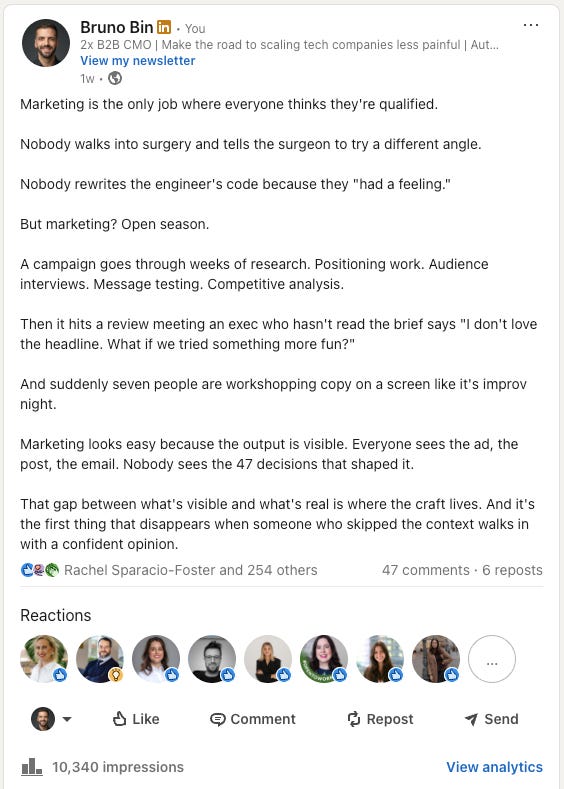
The comments were full of marketers sharing their version of the same experience. The override that killed a campaign. The feedback loop that never ends. The meeting where keeping the peace won over doing the right thing. Different companies, different contexts, same pattern.
This is clearly a topic people feel strongly about, and after sitting with it for a while, I think there is more to unpack here than what I covered in the post. Because the easy take is that the opinions are the problem.
Opinions are not the enemy
Some of the most valuable lessons I carry came from opinions that were tough to hear.
At a previous company, our marketing team spent weeks on a flyer for an event in the UK. We were inspired by old-school advertising copywriting. The headline was clever. The design was creative. The photo was on point. It was truly great work. Then our CRO at the time looked at it and said something along the lines of “nobody in the UK knows who we are. Just say what we do.”
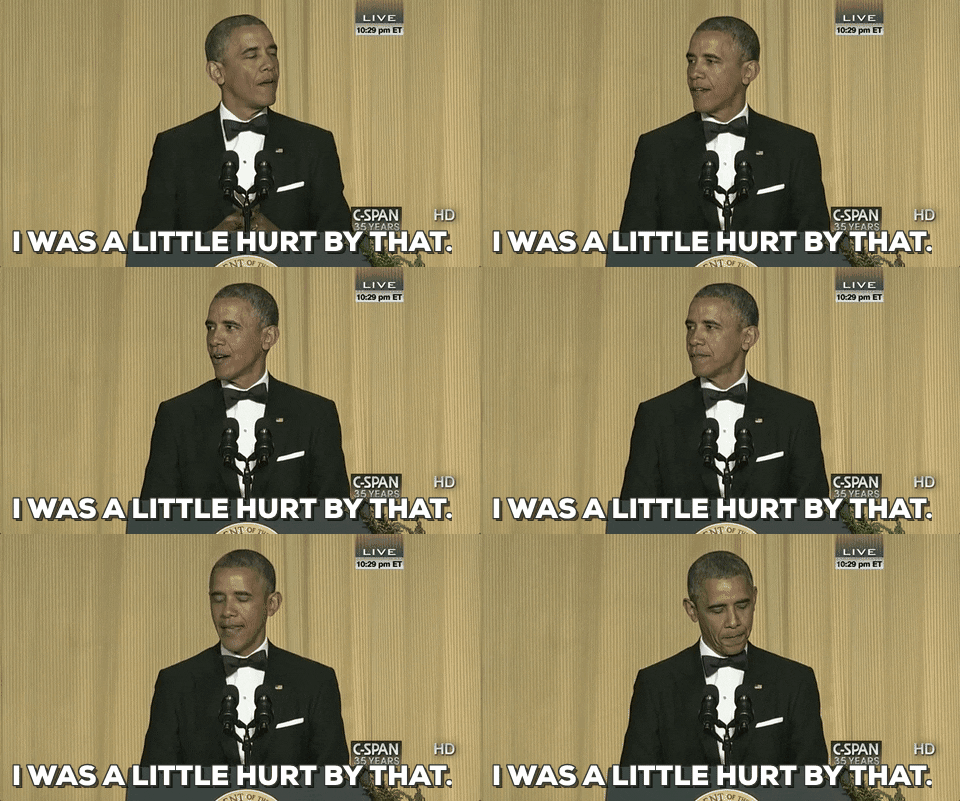
That hurt. He was right.
Same CRO, different project. We produced a company video with an agency. Shot at a mall with actors, shot at our office. A long, expensive project.
When it was finally ready, I remember sitting in my house at 8 or 9 in the evening on the phone with him while he picked apart specific things we were missing. Integration capabilities that customers and prospects kept asking about. Details that mattered to the market and that we had overlooked.
It was painful to go back and add all of that. He was right again.

Those were not random opinions from someone who just did not like the font. Those were educated perspectives from someone who was hearing things from the market every day. They made the work better. They made me better and I still carry those lessons.
So what is the actual problem?
The problem is not that people have opinions about marketing. The problem is what happens when “open season” leads to keeping the peace.
When every voice carries equal weight regardless of expertise or context, the path of least resistance is to play it safe. Play it generic. Round off the edges until nobody objects, and also nobody notices.
There is a classic version of this. Take a VC-backed startup. The founder is always working with investors, and there is always an incentive to tell the biggest possible story, because that is what makes the company more valuable. Huge TAM. Massive revenue potential. Position it as a platform, make the story as big as it can possibly be.
That’s all great. But when it becomes a series-A startup website headline, you sacrifice clarity and focus. It turns into the kind of generic, synergy-filled, enterprise-platform language that nobody outside the building actually understands.
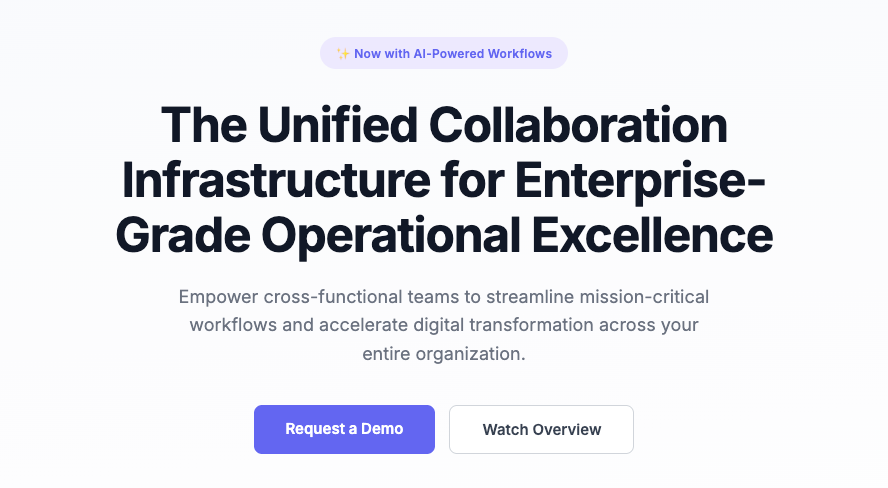
That is what “open season” produces at its worst. Not bad opinions. Consensus that kills differentiation.
The balance
This is the part that is genuinely hard. And I think it is what separates the marketers who are really good at what they do from the ones who are still developing.
Knowing when to listen, learn, adapt, and redo because there is real, educated, valuable feedback on the table. Versus knowing when to stand up with confidence for your work because you understand something about the market, the audience, or the craft that the person giving feedback does not.
I saw this recently with a designer on our team. We were producing a video and there were a lot of opinions floating around about how to visually differentiate and strengthen the brand. Many ideas, from many people. This designer took control. He acknowledged the ideas, said they could be considered in the future, then laid out exactly how he was going to move forward and why.
When I watched the final video a few days later, it was growing on me. And I realized he was right. He had the expertise to filter through the noise, make the call, and deliver something better than what a committee would have produced.
That is the other side of the coin. Sometimes you cannot let the voices get too loud. You have to trust your judgment and your ownership of the craft.
Earning the trust
When you get this balance right, something starts to shift. The executives who had strong opinions start to see your expertise in action. They start to trust your judgment. Not because you fought them. Because over time, the results proved you knew what you were doing.
Marketing is open season. It always has been.
The job is not to shut that down.
✌️