

Quick note before we dive into this week’s article: I’m going to be taking a few weeks off to recharge, visit family, turn 40. I’ll be back with the newsletter sometime in August.
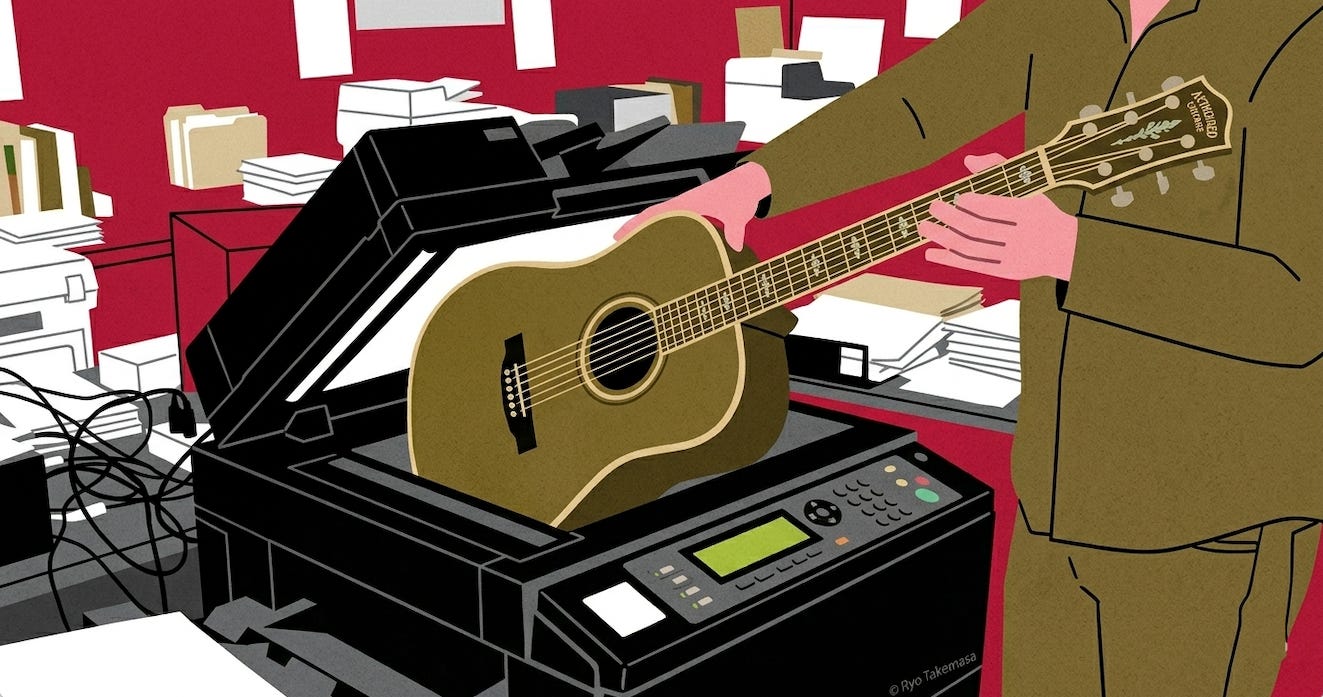
I knew it was a bot.
You knew it was a bot.
The person who deployed it probably knew everyone would know.
They did it anyway because some playbook told them to “engage with 50 posts a day” and a tool made it cheap enough to not think twice.
That moment, where everyone involved knows the interaction is fake and goes through with it anyway, is worth sitting with.
The comment section used to matter
Go back a couple of years. A thoughtful reply from someone with real experience could extend your post’s reach, start a conversation, pull in people who weren’t in your network. The LinkedIn comment section was where real distribution happened in B2B. Actual human interaction driving actual reach.
That’s kinda gone.
LinkedIn is fighting back. 94% accuracy on detecting AI slop, cracking down on engagement pods, shadowbanning accounts. And it’s working on the supply side.
But the real damage is behavioral. People still read comments. They just read every single one through a filter now: “is this a real person?” before they even process what’s being said. That filter doesn’t go away because LinkedIn improved its detection. And no single platform can fix it, because this is bigger than LinkedIn.
On April 27, 2026, bot traffic officially passed human traffic on the internet for the first time. 57% bots, 43% humans. Cloudflare’s CEO said he didn’t expect it to happen until 2027. AI agent traffic grew nearly 8,000% year-over-year. When a person shops for a product, they might visit five websites. An AI agent doing the same task hits thousands. Multiply that across millions of users delegating tasks to AI and you get an internet where humans are now the minority.
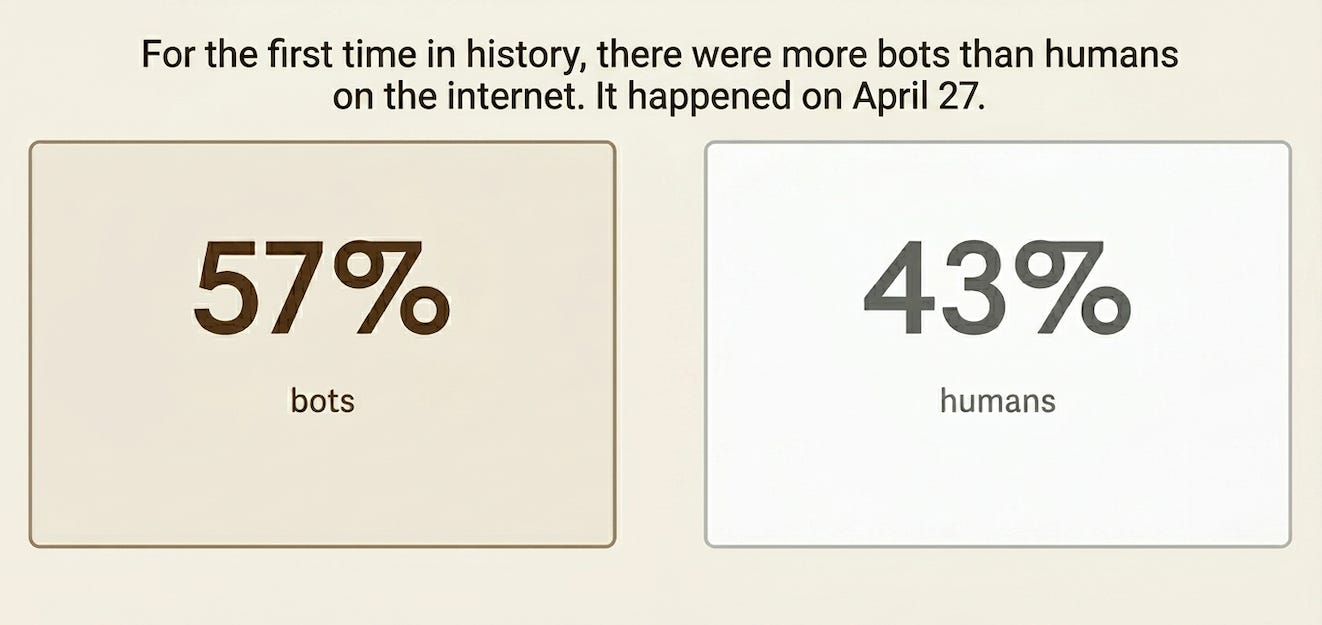
Think about what that means for a platform like LinkedIn. The comment section problem? That’s the early version of something much bigger. When the majority of traffic on the internet isn’t human, every metric we use to measure marketing starts to crack. Impressions, engagement, reach, click-through rates. How much of that is real? How much of your “audience” is actually people?
We, marketers, ruin everything we touch
LinkedIn isn’t the first channel marketers ruined.
Email was personal once. Then automated blasting made it free to send a thousand a day, and now 95% of outbound B2B messages get zero engagement. SEO surfaced the best answers until content farms buried them. Now AI search is replacing the whole model. Remember when webinars were educational? Try saying the word “webinar” to a B2B buyer without watching them reach for the close button.
The pattern is always the same. Something works. It stands out because it’s different, because it’s authentic, because it hasn’t been done to death yet. Then everyone sees it working and jumps in. And the moment everyone is doing the same thing, it stops being different. It becomes flat. Whatever made it stand out disappears under the weight of a thousand copycats running the same playbook.
This is the part that’s worth understanding: the playbooks aren’t useless. They’re the foundation. You need to know the standard plays before you can figure out where to break from them. The teams that stand out are the ones who learn the playbook deeply enough to twist it into something of their own. That’s what the Drift marketing team did years ago. They knew the B2B playbook inside and out, and then deliberately did things differently. They had a book called “This Won’t Scale.” The title was the philosophy. Make it work first. Figure out whether it can scale later.
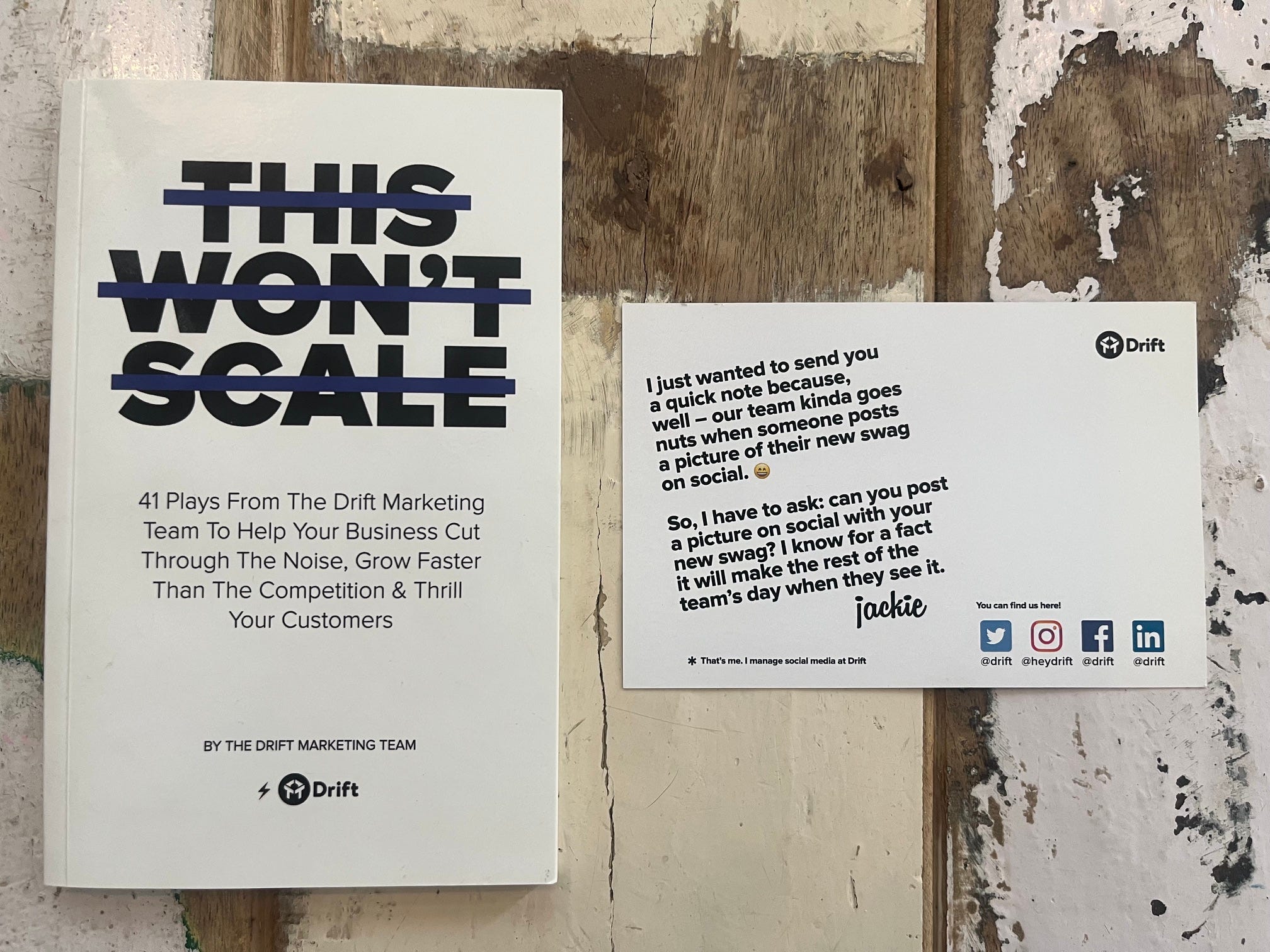
They weren’t rejecting the craft. They were extending it. And for a while, it worked brilliantly. Then everyone copied the surface of what Drift was doing without understanding why it worked, and within a couple of years the tactics stopped being special.
That cycle repeats over and over. Great marketing teams understand the playbook well enough to know which rules to break and which ones to keep.
Own your audience
If your entire distribution depends on LinkedIn’s algorithm, or Google’s index, or any platform you don’t control, you’re one policy change away from losing it.
The companies and individuals building direct relationships through newsletters and communities are the ones who survive each time a platform degrades. Everyone who moved their audience to something they own before a platform shift looked like a genius after. Everyone who didn’t scrambled.
If you’re building on rented land and you haven’t started moving your audience to something you own, you’re running out of runway to learn that lesson the easy way.
The scale trap
B2B marketing has a deep, almost pathological relationship with scale. If something works for 10 people, the answer is always to do it to 10,000. And 10,000 is always where it breaks.
That instinct is baked into how the industry operates. Every board deck asks for bigger numbers. Every planning cycle pushes for more leads, more impressions, more pipeline. The pressure to scale is constant, and it’s not irrational. Growth requires reach. But the things that actually build trust, recall, and reputation tend to be the things that resist scale. The private dinner with 12 buyers. The handwritten follow-up after a conference. The LinkedIn post that took you an hour to write because you actually had something to say. The partnership you built over months of real conversations.
None of that fits in a dashboard. None of it compounds the way a paid campaign does on paper. But it’s the stuff people remember. It’s the stuff that gets you on a shortlist before the buyer even knows they have a problem to solve.
Yesterday I went to an event put on by a Finnish company called Haamu. They do executive thought leadership on LinkedIn. Their event? The Haamu Games. A CrossFit-style workout competition for their customers and prospects. No booths, no badge scanners, no sponsored keynotes. Just people sweating together, laughing, and building the kind of trust that no online interaction will ever replicate. Try putting that in a dashboard.
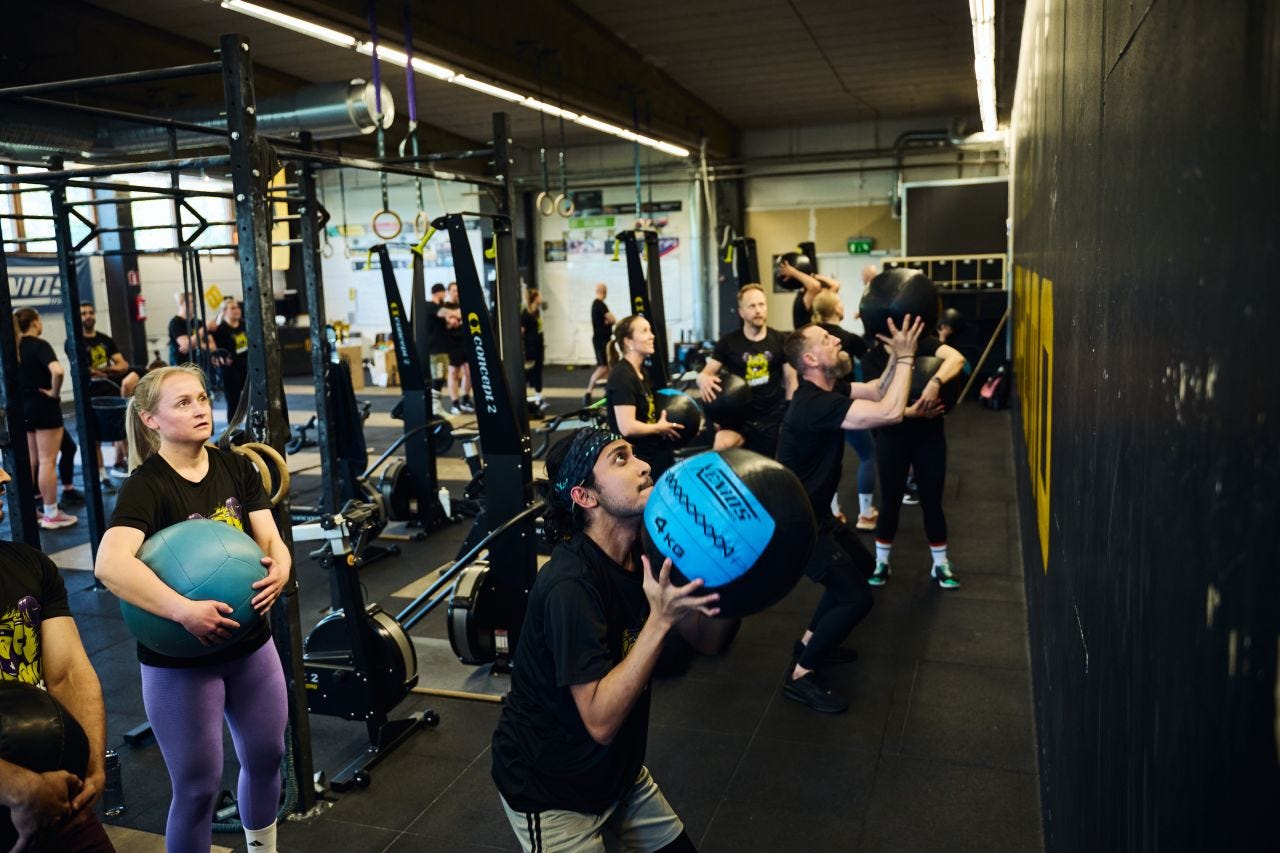
Maybe the best marketing has always been the stuff that doesn’t look like marketing. And maybe that’s exactly why it survives when everything else gets copied, automated, and flattened.
✌️