

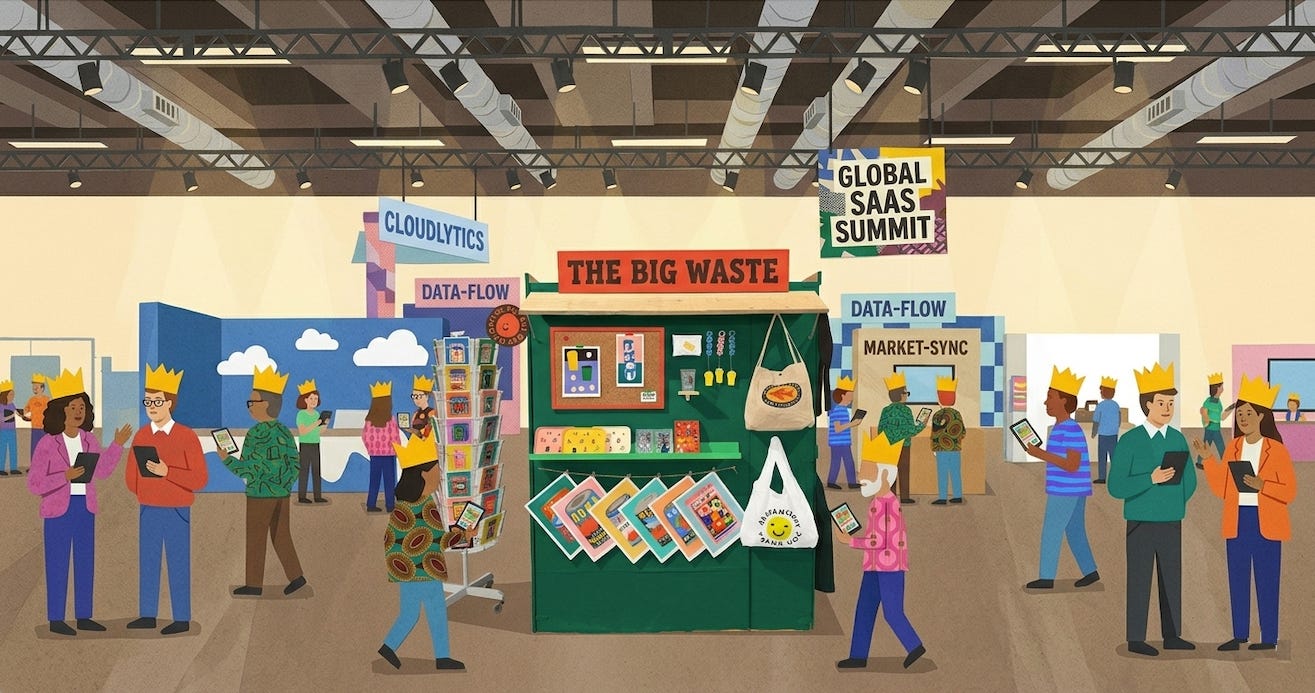
Your booth is a big waste. Yet 99% of startups do it anyway.
Facts.
At some point, often very early in any startup story, the team makes the decision to sponsor industry events in hopes of finding their next big customer.
“We need customers.”
“Let’s go to events.”
“Here’s a list of industry ones.”
“This one seems like a good fit.”
And then we proceed to sign the cheapest possible sponsorship option only to find out at the event floor that indeed, there will be no money made from the event. You’re $15K to $30K down and the ROI is nonexistent.
Funny enough, companies then continue to do the same thing in hopes the problem was the event, the booth, the messaging, the speed to follow up.
I love events. They can be a great channel for many GTM strategies. But doing them right is far from a no-brainer, and most startups are too early in their journey to have the budget and resources where a long-term sponsorship strategy actually makes sense. The kind where you’re investing in awareness and brand over time. Let’s be real. Most of the time the expectation is immediate pipeline impact.
PS: If it’s not clear enough from the above, yes. I made this exact mistake myself. Multiple times, at multiple companies. It took me too long to learn my lesson but I eventually did. Now I’m sharing it with you.
PPS: The value in events is not the event. It’s face-to-face time where connections and conversations happen. That’s where the best pipeline starts. We’ll dig into that.
1. The small booth problem
When you pick the cheapest sponsorship option, you end up with the smallest presence in a room full of companies that outspend you. Your booth is in the back corner. Your banner looks fine, but it’s standing next to a competitor with a 20-foot wall, a demo station, and three reps in matching polos.
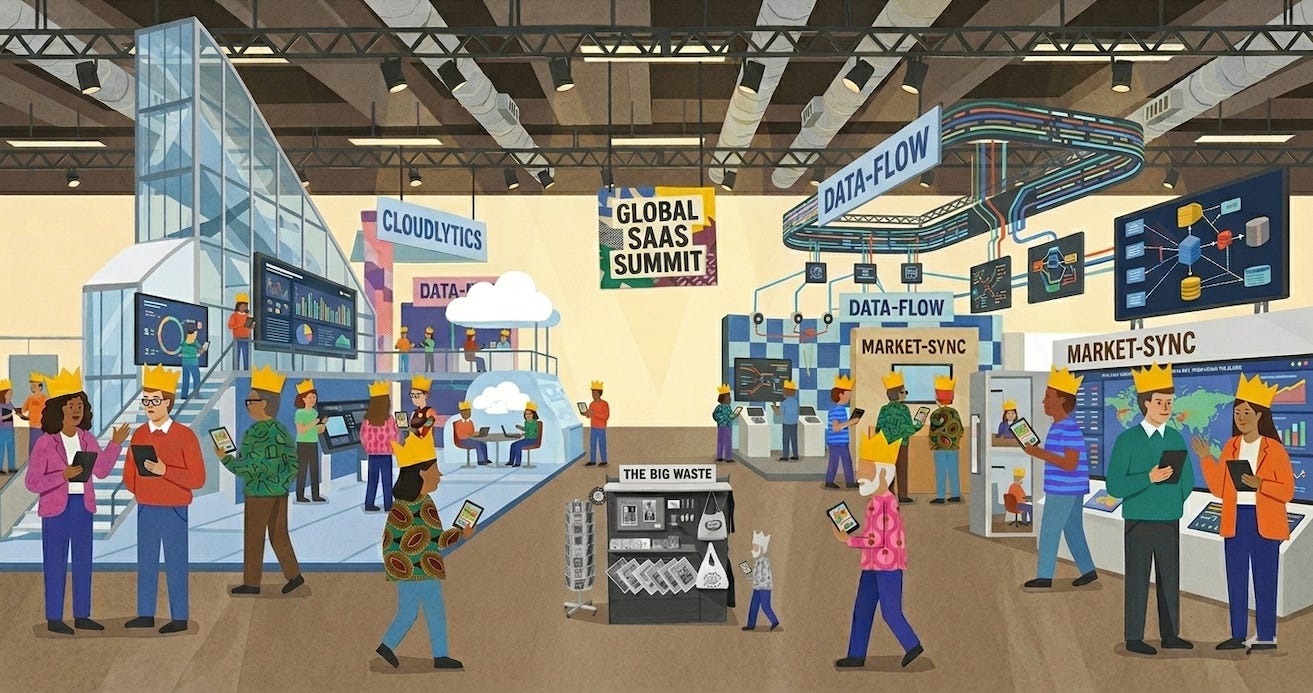
You’re technically there, but you look small. And looking small at an event is arguably worse than not being there at all. Prospects walk by and their brain registers your brand as a smaller player, which is the opposite of what you were hoping for. Great marketing makes the company seem bigger than it actually is.
To have a presence that actually makes you look like you belong, you need to spend at a level that most startups and scale-ups can’t justify. And if you can’t spend at that level, the booth is working against you.
Yes, you can get creative and pull off some guerrilla marketing around your event sponsorship to maximize your presence. I shared some real examples I’ve run with companies before on a previous post. On this post though, we’re narrowing in on a different approach altogether.
But before we do that, let’s talk effort.
2. The underestimated effort
The sponsorship fee is the obvious cost. The hidden one is how much of your team’s time gets eaten.
Weeks of back and forth with event organizers. Booth design that has to meet specific floor plan specs. Flyer design. Swag sourcing. Shipping coordination to make sure everything arrives on time and in one piece. Travel and hotel logistics. Briefing the team on talking points. Setting up the booth the day before. Tearing it down after. (Even from a sales rep POV, it eats up their week… it really has to be a productive event).
All of that time, energy, and headcount could be going into tactics that actually generate pipeline. Instead, your marketing team is playing event planner for a month leading up to a booth that might get 20 conversations over three days, most of them with people who just wanted the free pen.
3. People don’t go to events to visit your booth
People go to events to network, learn, and watch sessions. The expo floor is what they do with the leftover time between sessions or around meals. They walk through, glance at booths, maybe stop if something catches their eye or they already know the brand.
Can you stand out? Sure. But then we’re back to point one. Standing out requires a presence that costs more than most startups can afford.
4. The big idea
Here’s the big idea. After enough of these underwhelming booth experiences, we figured out something that worked a lot better. Skip the sponsorship entirely. Just attend.
Attending events instead of sponsoring them can result in just as many face-to-face conversations, meetings, and pipeline. And it’s significantly lighter for marketing to execute, which means you can be at that many more events with the same amount of budget and resources.
The key is the pre-event work. Weeks before anyone gets on a plane, you map out who’s going to be at the event. Speakers, attendees, sponsors, the companies that always show up. You won’t have a perfect list, but you can get close enough through the event website, LinkedIn, and asking around.
Then you run a campaign. Social, email, phone (yes, you can still use a phone to call, not just text). The goal is simple: book meetings before you land. Not “stop by our booth.” Actual sit-down conversations. Coffee in the hotel lobby. 30 minutes between sessions.
If you have the right kind of sales reps, hunters who are comfortable walking up to people and starting conversations, you pair that pre-event outreach with hustle during the show and you’re in the money. You get there with a packed meeting agenda, instead of leaving your success to chance.
5. The partner advantage
This one is a cheat code that not enough people take advantage of.
If you have technology partners or resellers who are sponsoring the event, you already have a booth. Just not your own. And theirs is probably bigger and busier than yours would have been.
I’ve been to plenty of events where we had our own small booth in one aisle and our partner had a major presence in the main hall. Their booth had traffic all day. Ours didn’t. The math on that is obvious.
Talk to your partners before the event. Ask if you can join their booth, do a joint demo, or use their space for meetings. Most partners are happy to do this because it makes their booth more interesting and shows their ecosystem in action. You get the visibility without the spend.
6. ‘Satellite’ events
This is the part that changed everything for me.
An industry conference is valuable for one reason that has nothing to do with the conference itself. Everyone is in town. Your customers, your prospects, your partners, people you’ve been trying to get 30 minutes with for six months. They’re all in the same city, at the same time, already in “meeting mode.”
When you shift your mindset from “how do we show up at the event” to “how do we create face-to-face opportunities while everyone is here,” a whole different playbook opens up.
Host a private dinner the night before the event. Ten to fifteen people. Keep it small, keep it curated. Pick a good restaurant, set a conversation topic, and make it worth attending for reasons that go beyond your product. Executives show up because the guest list is interesting, not because they want a demo.
Or join a partner who’s already running a happy hour or a breakfast roundtable. Co-host it. Split the cost, combine the invite lists. Now you have a room where your partner’s customers, who could be your prospects, are sitting across from you in a relaxed setting with a warm introduction already built in.
If you’ve mapped accounts together with your partners, this gets even stronger. Your partner invites their customer. That customer trusts the partner. The partner says “you should meet these guys.” That introduction is worth more than every flyer you’ve ever printed.
These small, private experiences around the event create the kind of conversations that turn into follow-up meetings, that turn into opportunities. All without the booth fee and the month of marketing coordination.
The real question
Is this less work than running a booth? No. It’s different work. You’re still putting in the hours. Pre-event outreach, partner coordination, planning dinners, hustling during the show. Nobody is coasting here.
But every hour goes toward something that directly produces meetings and pipeline. Compare that to the weeks your team spends on booth specs, shipping logistics, flyer design, and swag orders, all to stand behind a table hoping someone walks up.
Same energy. Completely different return.
And because you’re not burning $15K to $30K per sponsorship, you can be at more events. Instead of two or three a year, you can show up at six, eight, ten. Each one producing real conversations with real accounts.
Events are one of the best channels in B2B. The mistake is thinking you need a booth to take advantage of them.
✌️